whatsapp:
+86 15257778875
E-Mail:
vivianzhu0307@outlook.com


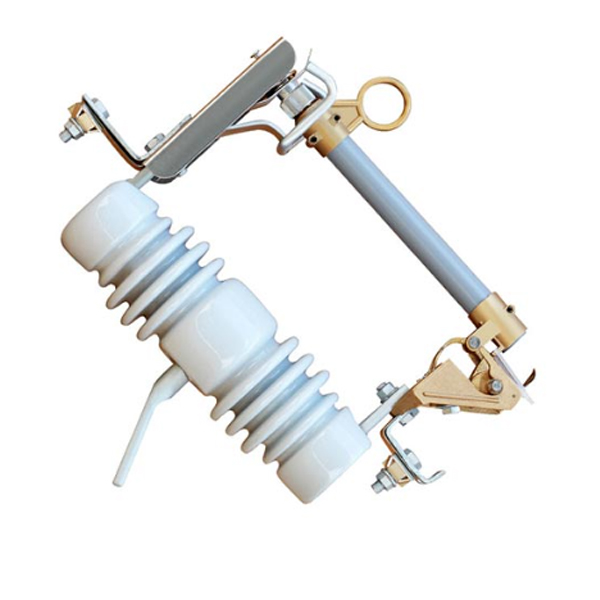
A drop-out fuse, also known as a drop-out cutout, is a type of protective electrical device widely used in power distribution systems. It combines the functions of a fuse and a switch, serving as a critical component to protect electrical equipment and lines from overcurrent and short-circuit faults. Unlike ordinary fuses that need to be replaced entirely after operation, the drop-out fuse has a unique structural design that allows its fuse tube to drop out automatically when a fault occurs, providing a clear visual indication of the fault location. This feature makes it convenient for maintenance personnel to quickly identify and handle problems, ensuring the safe and stable operation of the power grid.
The working principle of a drop-out fuse can be divided into two main states, with key processes as follows:
Current Carrying: The fuse element inside the fuse tube carries the circuit's rated current stably.
Mechanical Fixation: The fuse tube is held between upper and lower contacts by a mechanical mechanism.
Circuit Closure: Upper contact connects to the power supply side, lower contact to the load side, forming a closed circuit for smooth current flow.
Current Surge: Overcurrent/short-circuit causes a sharp increase in current through the fuse element.
Fuse Melting: The low-melting-point fuse element melts rapidly under the large current.
Arc Generation: An arc forms between the two ends of the melted fuse element.
Arc Extinguishing: Arc-extinguishing medium (e.g., quartz sand) in the fuse tube cools and extinguishes the arc quickly.
Drop-Out Action: The mechanical holding mechanism loses tension, and the fuse tube falls under gravity, cutting off the circuit and providing a visual fault indication.
Drop-out fuses are widely used in medium-voltage power distribution systems (usually 10kV, 20kV, etc.) due to their simple structure, reliable performance, and convenient maintenance. Their main application scenarios include:
Protection of Distribution Transformers: They are commonly installed on the high-voltage side of distribution transformers (such as pole-mounted transformers in residential areas or rural areas). When the transformer has an internal fault or the load current exceeds the rated value, the drop-out fuse acts to cut off the power supply to the transformer, preventing the fault from expanding and protecting the transformer from damage.
Branch Line Protection in Power Distribution Networks: In power distribution lines, drop-out fuses are used to protect branch lines. When a fault occurs in a certain branch line, the corresponding drop-out fuse operates, isolating the faulty branch from the main line, so that the rest of the lines can continue to supply power normally, reducing the scope of power outages.
Protection of Capacitor Banks: Capacitor banks used for reactive power compensation in power systems may have faults such as internal short circuits. Drop-out fuses are installed in the circuit of capacitor banks to provide overcurrent protection and quickly cut off the fault current when a problem occurs.
Temporary Power Supply Protection: In temporary power supply scenarios (such as construction sites), drop-out fuses are used as protective devices for temporary lines and equipment, ensuring the safety of temporary power use.
Drop-out fuses can be classified into different types according to their structural characteristics, rated voltage, and application environments. The common types include:
Ordinary Drop-Out Fuses: This is the most basic type, with a simple structure and low cost. It is suitable for general power distribution scenarios with normal environmental conditions (no strong wind, heavy rain, or severe pollution). The fuse tube is made of glass fiber or epoxy resin, and the fuse element is a common low-melting-point alloy.
Wind-Resistant Drop-Out Fuses: Designed for areas with strong winds (such as coastal areas or high-altitude areas), this type has an improved mechanical holding mechanism. It can prevent the fuse tube from falling out incorrectly due to strong wind, ensuring stable operation in harsh weather conditions.
Anti-Pollution Drop-Out Fuses: Used in heavily polluted environments (such as industrial areas, chemical plants, or areas with high dust content), the outer surface of the fuse tube and contacts of this type are treated with anti-pollution coatings. This can prevent the accumulation of pollutants from causing insulation failure and ensure reliable operation of the fuse.
High-Current Breaking Drop-Out Fuses: With a larger breaking capacity, this type is suitable for circuits with large short-circuit currents. It is often used in power distribution systems with high power density, such as industrial parks or large residential communities.
The drop-out fuse is an essential protective device in medium-voltage power distribution systems. It integrates the functions of overcurrent protection, short-circuit protection, and visual fault indication. Its unique drop-out mechanism not only ensures the reliable cutting off of fault currents but also facilitates maintenance personnel to quickly locate and handle faults, greatly improving the reliability and maintainability of the power grid. With different types designed for various application environments, drop-out fuses play a crucial role in protecting distribution transformers, branch lines, and other electrical equipment, ensuring the safe and efficient supply of electricity to users.
Q1: Can a drop-out fuse be reused after operation?
A1: No. The fuse element melts and is damaged. The tube can be reinstalled, but the element must be replaced with a same-spec new one for protection.
Q2: What’s the difference between a drop-out fuse and a circuit breaker?
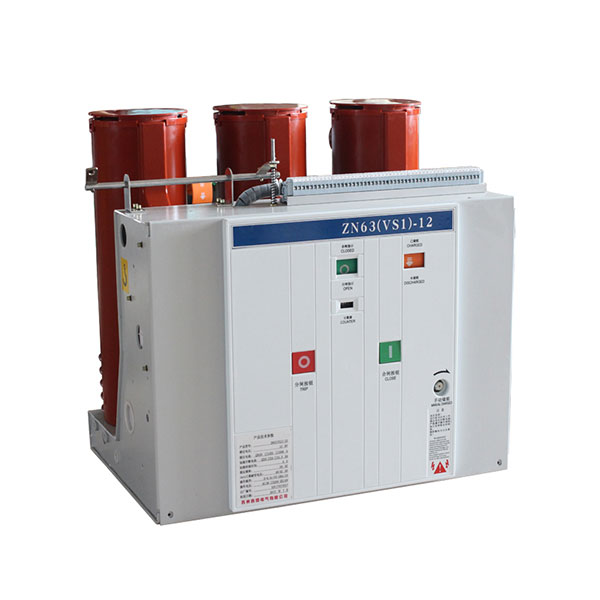
A2: Mechanism and scope differ. Fuses use melting elements for medium-voltage branch protection; breakers use mechanical contacts, have larger breaking capacity for high/low-voltage main circuits, and are resettable (fuses need element replacement).
Q3: How to check a drop-out fuse’s normal operation?
A3: The tube should be firmly held between contacts, with no damage/leakage/abnormal heating. Visually inspect, check contact tightness, and use a multimeter (element resistance near zero is normal).
Q4: What to consider when selecting a drop-out fuse?
A4: Key factors: rated voltage (matches system), rated current (suits load), breaking capacity (exceeds max short-circuit current), and application environment (select wind-resistant/anti-pollution etc. types).
GET A QUOTE
 中文
中文 English
 Pусский
 Français
 Español